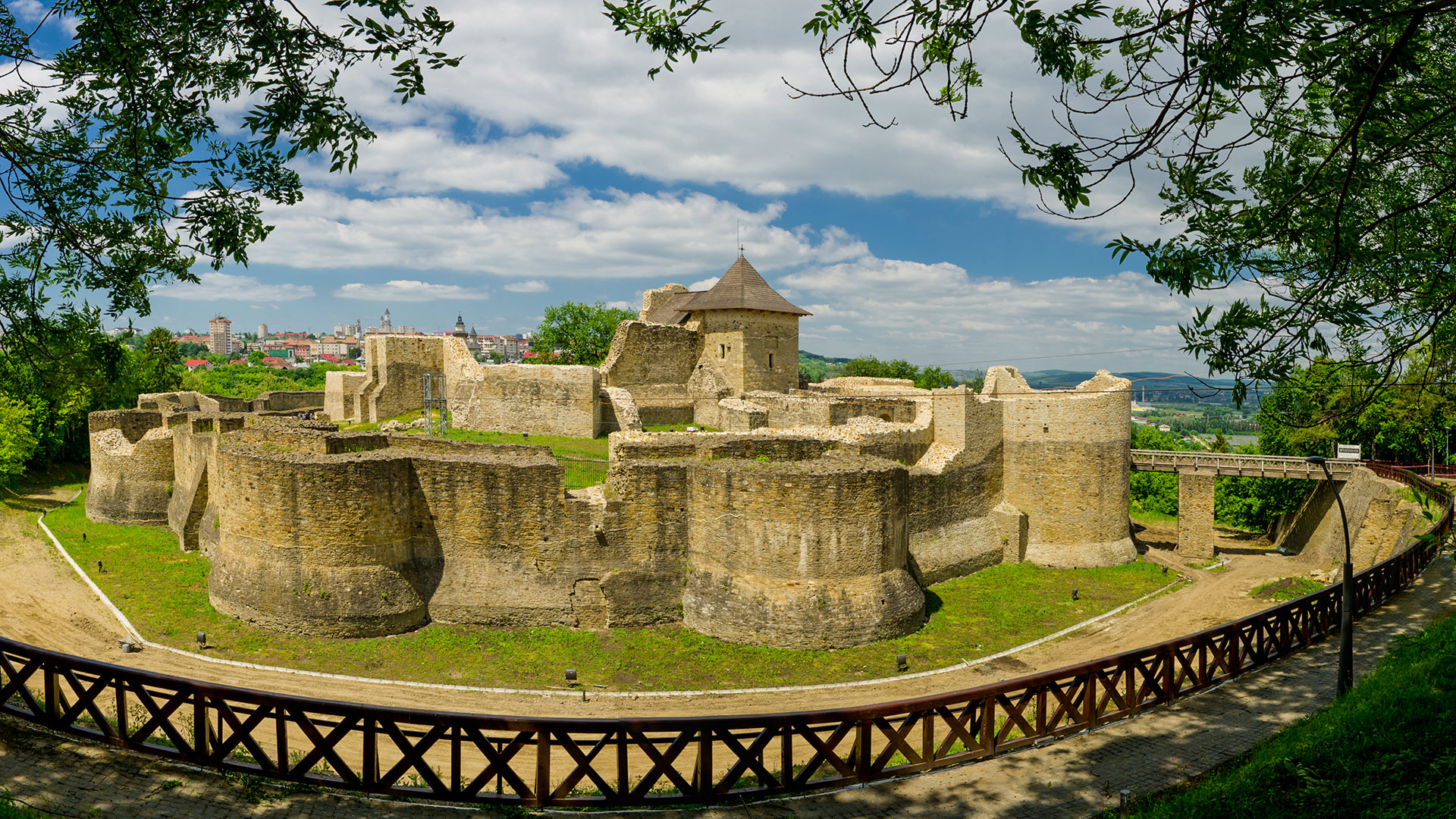
The Seat Fortress of Suceava
Fortress of the rulers of Moldavia
The Suceava Fortress is one of the most important medieval monuments in Romania and a symbol of the power and independence of Moldova. Situated on a high plateau on the outskirts of the city of Suceava, the fortress was the main residence of the Moldavian rulers for almost two centuries.
The foundation of the fortress
The fortress was built at the end of the 14th century, during the reign of Petru I Mușat (1375–1391). Its strategic position, on a difficult-to-access promontory, offered an important defensive advantage.
During the reign of Alexander the Good (1400–1432), the fortress was consolidated and expanded, becoming the political and administrative center of Moldova.
The era of Stephen the Great
The period of maximum importance of the Seat Fortress was during the reign of Stephen the Great (1457–1504). The ruler strengthened the walls, added bastions and defensive ditches, and transformed the fortress into an almost impregnable fortification.
The fortress withstood several sieges, including Ottoman attacks. In 1476, after the Battle of Războieni, the Ottoman army led by Sultan Mehmed II failed to conquer the fortress.
Under Stephen the Great, the Citadel of Scaun became the symbol of Moldova’s resistance to the great powers of the time.
Architecture and defensive system
The fortress is built of stone and brick, with an almost rectangular plan. The defensive system included:
- Walls several meters thick
- Defense towers
- Deep trenches
- Drawbridge at the entrance
The fortification was organized into two main areas: the fortress itself and the outer courtyard, added later for better defense.
The construction reflects Western influences in fortification techniques, adapted to local specifics.
Decline and destruction
In the 17th century, the importance of the fortress began to decline, as the capital of Moldavia was moved to Iași. In 1675, Prince Dumitrașcu Cantacuzino ordered the destruction of the fortifications, at the request of the Ottoman Empire, to prevent their use in possible uprisings.
Following these destructions, the fortress remained in ruins for several centuries.
Restoration and current role
Starting with the end of the 19th century and especially in the 20th century, the Seat Fortress was subjected to extensive restoration and consolidation works.
Today, the fortress is one of the most important tourist attractions in northern Moldova. The interior has been arranged as a museum, and visitors can discover exhibitions dedicated to medieval history, weaponry, court life and Moldavian lordships.
A symbol of medieval Moldova
The Suceava Fortress is a symbol of the statehood and resistance of medieval Moldavia. Through its strategic position, its role in major historical confrontations and its close connection with rulers such as Petru Mușat, Alexandru cel Bun and Ștefan cel Mare, the fortress remains an impressive testimony of the Romanian past.
Today, it continues to attract thousands of visitors, being a place where history comes to life within its stone walls.
Location and access
Eridor Chalet is located in an accessible area, ideal for exploring the historical sites of northern Moldova. The property is approximately 45 km from the Suceava Fortress, one of the most important medieval fortifications in Moldova.
The distance can be easily covered by car, offering the possibility of a day trip to this historical monument, returning to the comfort and tranquility offered by Eridor Chalet.
Photo source: www.visitingbucovina.ro/